
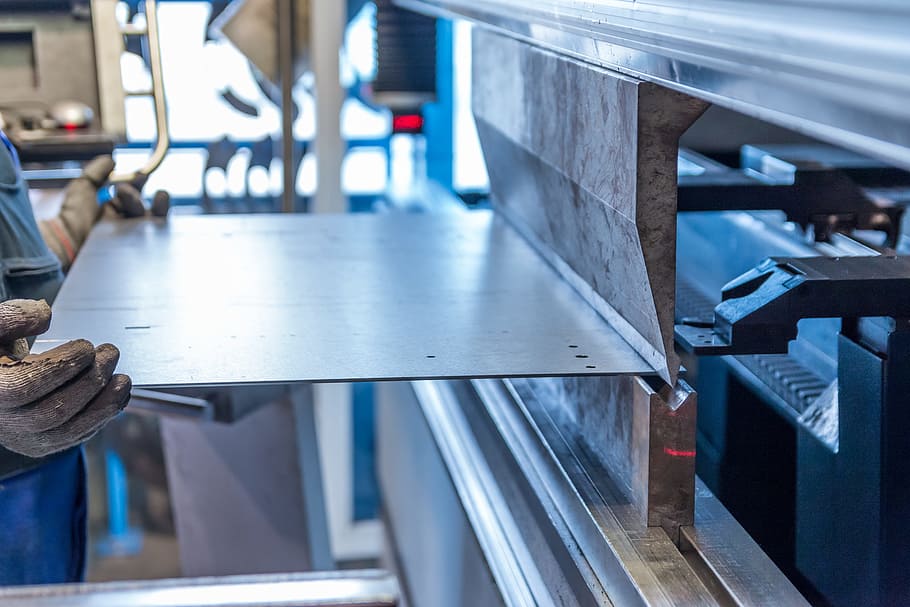
Sheet metal bending is a manufacturing process used to shape flat sheets of metal into predetermined forms and angles. This process is commonly employed in various industries, including automotive, aerospace, construction, and electronics, to create a wide range of products such as enclosures, brackets, panels, and components.
The sheet metal bending process typically involves the following steps:
Material Preparation:
- Begin with a flat sheet of metal, often aluminum, steel, or stainless steel. The thickness of the sheet can vary depending on the application.
Tooling Setup:
- The sheet is placed between two dies, with one die featuring the desired shape or contour, and the other providing support. The die with the desired shape is typically mounted on a press brake machine.
Clamping:
- The sheet is clamped securely between the two dies to prevent movement during the bending process.
Bending:
- The press brake applies force to the sheet, causing it to deform and take on the shape of the contour on the die. The degree of bending is determined by factors such as the applied force, the shape of the dies, and the material properties.
Springback Correction:
- After the bending process, some materials may exhibit “springback,” where the metal partially returns to its original shape. To achieve the desired final shape, adjustments may be made to the bending process or additional tooling may be used.
Sheet metal bending can be performed using different types of press brakes, such as mechanical, hydraulic, or servo-electric press brakes. The choice of press brake depends on the specific requirements of the bending task.
This process is crucial in creating components with precise geometries and is an essential technique in the fabrication of various products made from sheet metal. The accuracy of the bending process is critical for ensuring that the final products meet design specifications.