
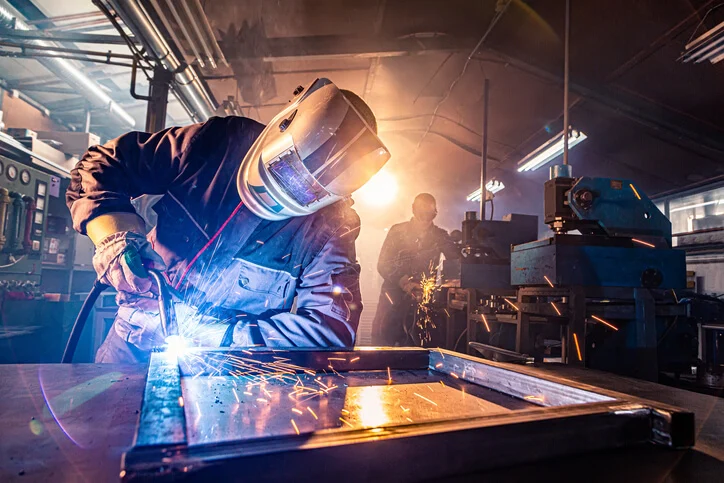
Fabrication refers to the process of creating, constructing, or manufacturing something by assembling or manipulating various materials, often involving cutting, shaping, and joining processes. The term is broad and can apply to the production of a wide range of products across different industries.
In the context of manufacturing and construction, fabrication typically involves the following key activities:
Cutting:
- Materials such as metal, plastic, wood, or composites are cut into specific shapes and sizes using various cutting tools, such as saws, lasers, or water jets.
Shaping:
- The cut materials may undergo shaping processes, which include bending, forming, rolling, or stamping. These processes give the materials the desired contours and dimensions.
Joining:
- Joining methods are employed to connect individual pieces of material. Common joining techniques include welding, riveting, bolting, soldering, and adhesive bonding.
Assembling:
- The individual components or parts are assembled to create the final product. This may involve welding or fastening components together, depending on the fabrication requirements.
Finishing:
- After assembly, the fabricated product may undergo finishing processes such as painting, coating, polishing, or surface treatments to enhance its appearance, durability, or functionality.
Fabrication is a fundamental process in various industries, including metal fabrication, where metals are shaped and assembled to create structures, machinery, or components. It is also integral in the production of plastic products, electronic devices, furniture, and more.
In summary, fabrication encompasses a range of techniques and processes aimed at transforming raw materials into finished products through cutting, shaping, joining, and assembly, with the ultimate goal of meeting specific design and functional requirements.